
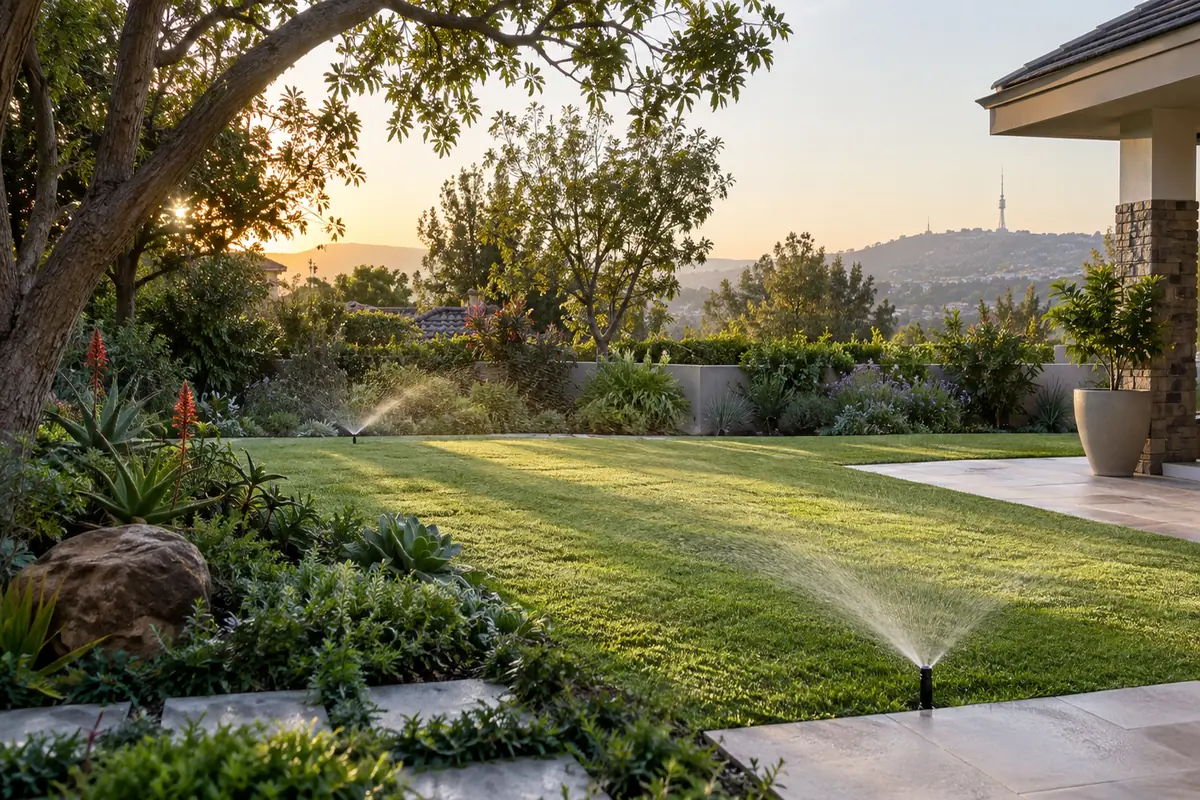
Pretoria’s seasons place very different demands on a garden. Summer brings heat, active growth and most of the region’s rainfall. Winter is usually dry, with cooler days and slower plant growth. Leaving one timer programme in place throughout the year can therefore cause dry patches in one season and unnecessary watering in another.
A useful irrigation schedule starts with what is happening on the property now. Rainfall, soil, shade, plant type and the condition of the system all matter. The timer is only one part of that picture.
Start With the Garden, Not the Controller
Before changing run times, walk through the irrigated areas while the system is operating. Look at where the water lands and how the soil responds. A longer programme will not correct a blocked nozzle, a leaking fitting or a sprinkler that is watering paving.
Check the following:
- whether each zone starts and stops correctly
- whether spray heads rise fully and rotate as intended
- whether drip lines deliver water along the full planted area
- whether water pools or runs off before the cycle ends
- whether shaded beds remain wet long after sunny areas have dried
These observations help separate a scheduling problem from a repair or coverage problem. If one area stays dry while the rest of the zone is wet, the system may need adjustment rather than more minutes on the timer.
Summer Irrigation in Pretoria
Pretoria’s summer rainfall can reduce the amount of scheduled watering a garden needs. However, rainfall is not always even across the city or across one property. A quick storm may wet the surface without reaching deeper roots, while steady rain may make the next irrigation cycle unnecessary.
Pause or reduce automatic watering after meaningful rain and check the soil before restarting the normal programme. A rain sensor or suitable controller setting can help, but it still needs to be tested and used correctly. Watering early in the morning also gives plants time to take up moisture before the hottest part of the day.
New planting, shallow-rooted lawn and established shrubs should not automatically share the same schedule. Separate zones make it easier to give each area a suitable amount of water without soaking everything equally.
What Changes During the Dry Winter

Cooler weather normally slows growth and reduces evaporation. Many established garden areas need less frequent watering than they do in summer. That does not mean every zone should simply be switched off.
Sunny lawns, young plants, containers and areas beneath roof overhangs may still dry out. Check the soil below the surface before deciding. If it remains damp for several days, extend the time between watering cycles. If it is dry at root depth, use a measured cycle and review the area again.
Winter is also a sensible time to inspect the system for small leaks, damaged heads and controller faults. Problems can be easier to correct before the hotter growing period places more demand on every zone.
Match Run Time to Soil and Slope
Water enters different soils at different rates. A flat bed with well-prepared soil may accept a steady application, while compacted ground or a sloped lawn can begin shedding water quickly. When water runs onto paving or down a slope, increasing the total run time often adds waste without helping the roots.
Shorter cycles with a pause between them can give slow-absorbing soil more time to take in water. Drip irrigation may be better for selected beds, hedges and planted rows because it applies water close to the root area. The correct choice depends on layout, pressure and plant spacing.
The Department of Water and Sanitation encourages watering during cooler periods, grouping plants according to their needs and watering thoroughly but less often where appropriate. These principles are useful, but the final schedule should still respond to the actual garden and any current municipal rules.
Use Separate Zones Properly
Zoning is one of the most useful features of a planned irrigation system. A lawn in full sun, a shaded border and a row of shrubs do not lose moisture at the same rate. When they operate as one zone, one area is likely to receive too much or too little water.
Review each zone independently. Record its purpose, current run time and watering days. Then make one change at a time and observe the result over several cycles. This is more reliable than making a large adjustment across the whole controller and trying to work out what went wrong later.
When the Schedule Is Not the Real Problem
A timer cannot compensate for poor pressure, leaking underground pipework, blocked emitters or badly positioned sprinkler heads. Arrange an inspection when zones fail to start, pressure changes suddenly, water appears where no head is visible, or the same dry areas remain after sensible scheduling changes.
911 Irrigation Systems provides controlled irrigation support in Pretoria and works on complete irrigation systems across Pretoria. We can check the controller, zones and visible coverage before recommending the next practical step.
To review your watering programme, note which areas are struggling and when the system last operated. Then send us the property details and photos so we can help you plan an inspection.
External reference: Department of Water and Sanitation water-saving guidance