
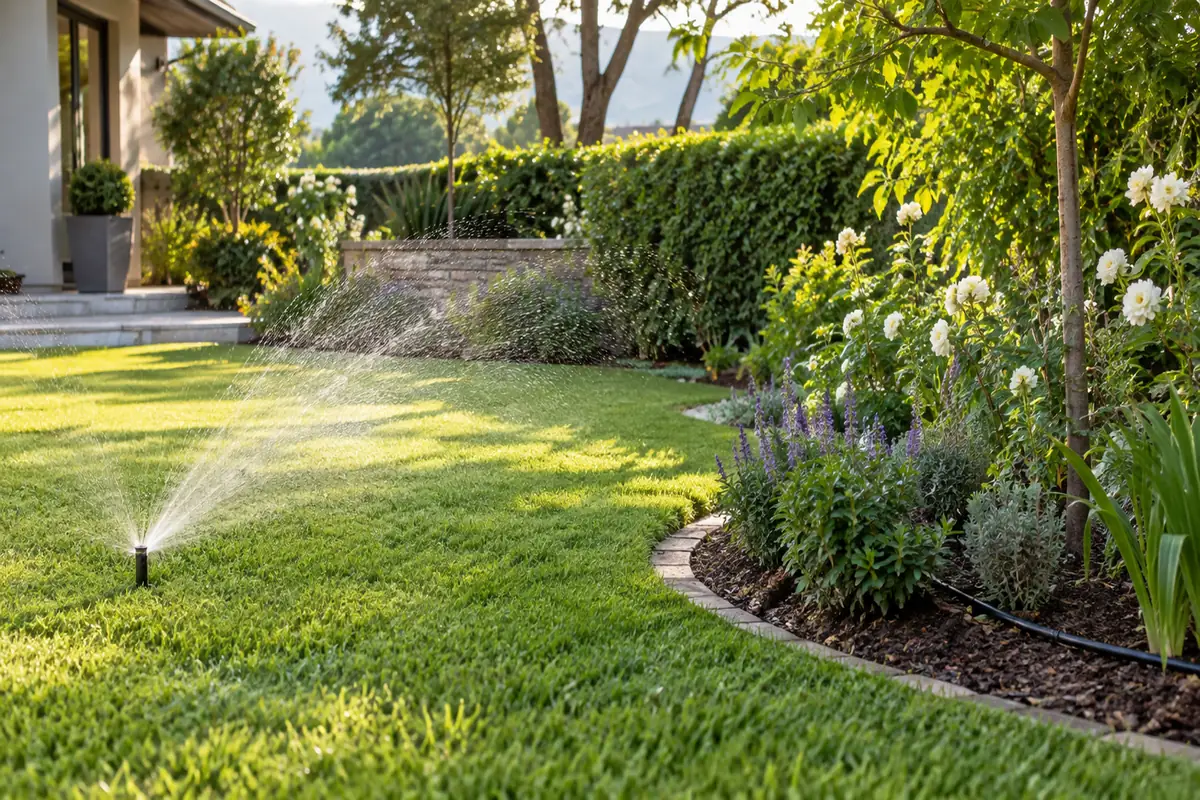
Choosing between drip and sprinkler irrigation is not simply a question of which system uses less water. The right answer depends on what is being watered, how the property is laid out and how the system will be operated.
A lawn needs broad, even coverage. A hedge or vegetable row benefits from water delivered close to its roots. Many Pretoria properties contain both, which means the best solution is often a combination of irrigation methods arranged in separate zones.
Where Sprinkler Irrigation Works Well
Sprinklers are designed to spread water over an area. Pop-up heads are commonly used for lawns because they can sit close to ground level when inactive and rise while the zone operates. Correct head spacing and suitable nozzles help the spray patterns overlap evenly.
Sprinklers can work well for:
- established lawns
- broad groundcover areas
- larger open garden sections
- sports or communal grassed areas
The layout must account for boundaries, paths, walls and prevailing wind. A head placed too close to paving can waste water, while poor spacing may leave stripes or corners dry. Pressure also affects the distance and quality of the spray.
Where Drip Irrigation Has an Advantage
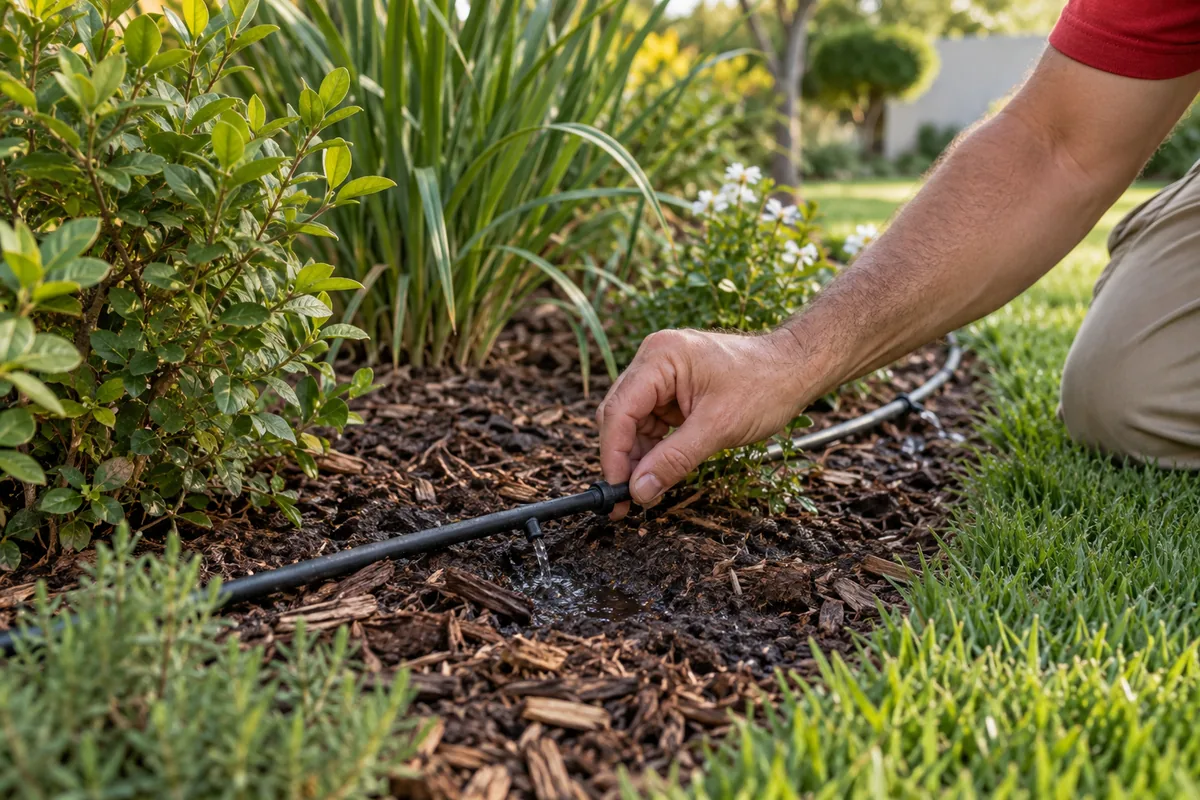
Drip irrigation applies water close to individual plants or along a planted row. It is useful where broad spray would be unnecessary or likely to wet paving and foliage.
Typical applications include:
- hedges and screening plants
- vegetable gardens and crop rows
- narrow borders
- planters and selected shrub beds
Emitter spacing should match the planting and soil. Filtration matters because small flow paths can block, and pressure needs to suit the drip components. A line laid without considering length, slope or plant spacing may deliver unevenly even if it looks tidy.
The Department of Water and Sanitation identifies drip irrigation as a way to deliver water directly to root zones and reduce the evaporation associated with spray watering. That benefit depends on proper layout, maintenance and scheduling.
Compare the Shape of the Area
The easiest way to begin is to look at the shape and use of each garden section. A rectangular lawn may be well suited to planned sprinkler coverage. A long hedge beside paving may be better served by a drip line. An irregular bed with mixed planting needs closer consideration because the plants may have very different water requirements.
Do not force one method to serve every part of the property. Separating lawns, sunny beds, shaded areas and drip zones gives the controller more useful control over timing.
Think About Visibility and Daily Use
Irrigation should not dominate a finished garden. Pop-up heads need to retract properly and sit at the correct height. Drip lines can be placed discreetly, but they should remain accessible enough for inspection and maintenance.
Consider mowing, edging, pets, garden work and future planting. A technically correct component can still be a poor choice if it is repeatedly damaged during normal property use.
Maintenance Is Different for Each System
Sprinkler systems need periodic checks for blocked nozzles, damaged heads, incorrect arcs and pressure changes. Drip systems need attention to filtration, emitters, joins and line condition.
Neither method is maintenance-free. Run the system while watching the full zone rather than judging it only from the controller. Early repairs are often easier when you can identify exactly where coverage changed.
Can Drip and Sprinklers Share One Zone?
They generally have different application patterns and run-time needs. Combining them on one zone can make scheduling difficult because the lawn and planted bed may not need water for the same duration.
A planned mixed system usually separates these methods. The controller can then run each zone according to its own purpose, soil and exposure. Existing systems can sometimes be adapted, but available pressure, pipe layout and valve capacity must be checked first.
Choose Around the Property, Not a Product Label
The most suitable irrigation plan begins with the landscape. Note the lawn areas, plant groups, slopes, sunny sections, shaded sections and places where spray must be avoided. Then consider the available water supply and how each zone will be maintained.
911 Irrigation Systems installs and repairs drip irrigation in Pretoria as well as sprinkler systems for Pretoria properties. For mixed gardens, we can assess the zones and explain where each method makes practical sense.
We work across Pretoria and Centurion service areas. Send us your property details, garden photos and the areas you want to water to arrange the next step.
External reference: Department of Water and Sanitation guide to water-saving irrigation technologies