
Need irrigation help in Pretoria?
Deliver measured water along productive rows with drip farming designed for the crop and available supply. We install and repair agricultural drip lines near Pretoria, with practical attention to filtration, row length and consistent outlet flow.
Need Irrigation Help?
Request a Call Back

DRIP FARMING CHALLENGES
A drip block can appear tidy while flow varies from row to row. Restrictions at filters, damaged laterals, long runs and unsuitable emitter spacing need to be evaluated before more runtime is added.
Pressure loss along an overlong run may reduce water reaching the final plants.
Cultivation, foot traffic or wear can puncture tubing and release the zone flow early.
Sediment and mineral deposits may change delivery at individual points.
Poor zone division can make it difficult to operate within the available water window.
OUR APPROACH
We match the drip layout to row length, crop spacing, field divisions and the supply feeding the block. Filters, manifolds, flush ends and operating zones are treated as working parts of the field rather than afterthoughts.
WHY CHOOSE 911
Drip farming has to work during ordinary farm operations. We consider how rows are accessed, how lines will be flushed and where faults can be isolated, then explain the completed arrangement to the grower or site team.
RECENT WORK
These examples show how row-level symptoms were traced through filtration, pressure and field layout.
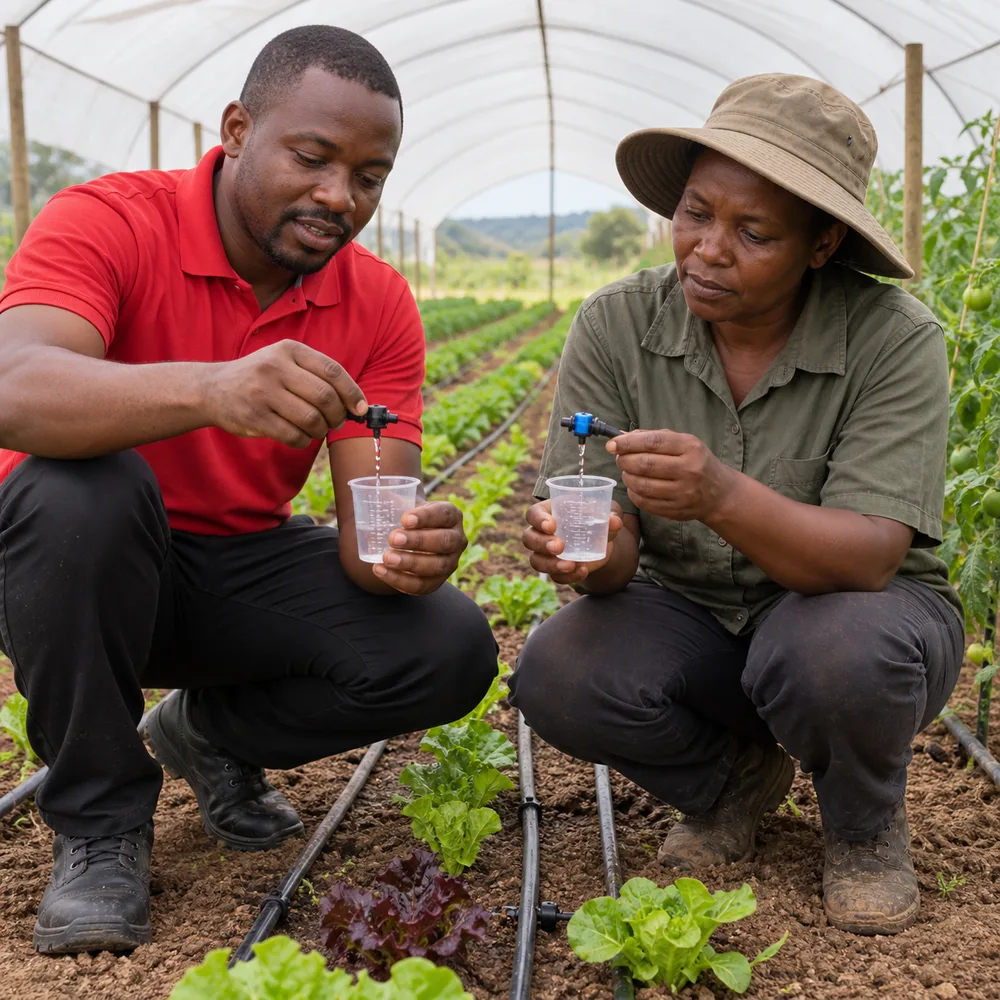
Tomato rows near Bronkhorstspruit showed strong growth near the manifold and stress at the far ends. We compared outlet flow along the laterals and found that the block was too large for one cycle. Dividing the demand and flushing the rows improved delivery across the final plants.
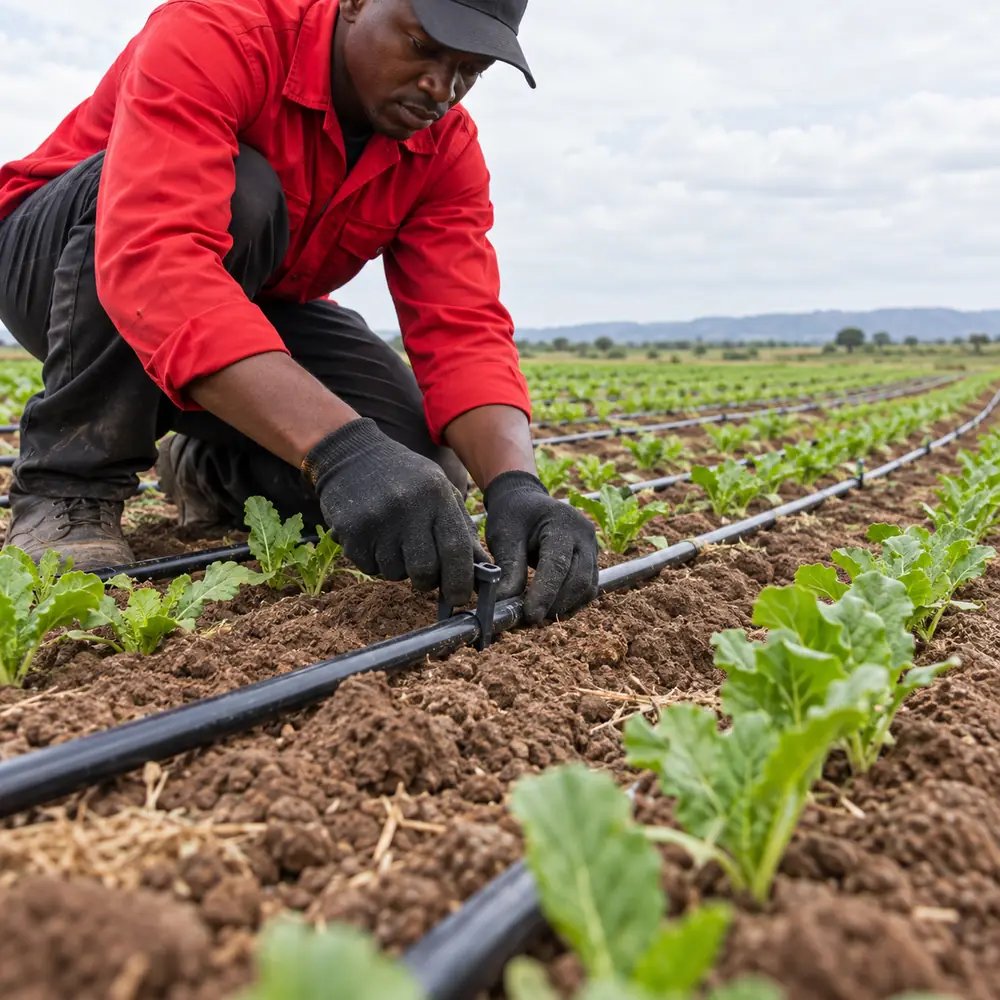
A cultivation pass had punctured a lateral in a Kameeldrift vegetable block, causing a wet strip and weak flow beyond it. We isolated the row, replaced the affected section and checked downstream emitters. The repaired line held pressure without disturbing neighbouring crop rows.
The filter supplying a Rayton drip block was difficult to open and had not been cleaned regularly. We repositioned the service arrangement within the approved area, flushed the block and explained the cleaning sequence. Flow checks showed fewer restrictions at the selected end outlets.
Sediment collected at the ends of vegetable rows on a Centurion smallholding, leading to repeat blockages. We installed accessible flush points, cleaned the lines and tested the first and final emitters. The grower could then complete routine flushing without cutting the tubing.
RELATED SERVICES
Drip blocks rely on sound supply, filtration and zone control. These related services support the wider agricultural system.
Broader distribution and field zoning for productive sites.
Low-flow watering for orchards and permanent planted rows.
Repeatable schedules and valve control for watering blocks.
Supply routes and leak repairs feeding agricultural zones.
USE WATER WISELY
Drip farming can limit water between rows when the system is correctly sized and maintained. It still requires clean filters, intact laterals and field checks because a blocked outlet is easy to miss until crop stress appears. View national water-use efficiency resources.
IRRIGATION QUESTIONS
Practical information about agricultural drip rows, filters, zones and repairs.
Many row crops, vegetables and selected permanent plantings can use drip delivery. Suitability depends on the crop, soil, water source and field operation.
Spacing is considered against the crop interval, root area, soil movement and outlet flow rather than chosen as a universal distance.
Yes. Localised damage can often be cut out or joined correctly, provided the remaining tubing is in serviceable condition.
The interval depends on source-water quality, filtration and observed sediment. Flush points should be accessible so checks can form part of routine operation.
Yes. We assess suitable agricultural and smallholding sites in the greater Pretoria region, subject to access and project scope.